
How to Prevent Negative Hotel Reviews: The Hotelier’s Guide
Negative hotel reviews can damage a property’s online reputation, influence booking decisions, and highlight operational problems that are costing the business repeat guests. Yet many negative reviews are not caused by problems that are impossible to solve. They often result from issues that go unnoticed, complaints that are handled too late, or expectations that are never properly managed.
For hoteliers, learning how to prevent negative hotel reviews means changing the way guest satisfaction is managed. Instead of waiting for a guest to publish a complaint on Booking.com, TripAdvisor, or Google after checkout, hotels need a systematic way to identify dissatisfaction and resolve problems while guests are still on the property.
The key is to move from reactive reputation management to proactive guest experience management.
Learning how to avoid negative hotel reviews starts with identifying guest dissatisfaction early, making it easy to report problems, and giving your team the tools to resolve them before checkout.
In this guide, you will learn why hotel guests leave negative reviews, when dissatisfaction turns into public criticism, how to collect feedback during a stay, and which processes can help your team prevent recurring complaints. You will also discover how guest feedback software and review monitoring tools can support a more effective reputation management strategy.
Why Do Guests Leave Negative Hotel Reviews?
Understanding why guests leave negative reviews is the first step toward preventing them. Although every property has its own challenges, hotel complaints frequently involve a combination of service failures, unmet expectations, communication problems, and issues that remain unresolved.
Research published in Tourism Management, analyzing 27,864 hotel reviews, identified recurring dissatisfaction topics and found that complaint patterns vary according to hotel category. Service and pricing issues were particularly relevant to higher-end properties, while facility-related problems were more prominent among lower-end hotels. (1)
A separate 2025 study of negative Booking.com reviews also found recurring patterns in complaints about facilities, staff behavior, and other aspects of the guest experience. These findings reinforce an important principle: monitoring complaints is useful not only for understanding individual incidents, but also for identifying persistent operational weaknesses. (2)
Here are the most common sources of negative hotel reviews.
1. Cleanliness and room maintenance problems
Cleanliness is fundamental to the hotel experience. Guests expect a room to be ready, hygienic, and consistent with the standard advertised when they booked.
Common complaints include:
- Dust, dirty bathrooms, or poorly cleaned surfaces.
- Stained bed linen or towels.
- Unpleasant smells in bedrooms or bathrooms.
- Broken fixtures, malfunctioning air conditioning, or plumbing problems.
- Noise, uncomfortable beds, or inadequate soundproofing.
Some problems can be corrected immediately, while others require maintenance or housekeeping intervention. The important point is to identify them before the guest decides that the entire stay has fallen below expectations.
A simple room inspection process, combined with a clear channel for reporting problems, can reduce the likelihood that small defects turn into public complaints.
2. Poor communication and unhelpful service
A guest might forgive a minor inconvenience if the hotel responds quickly and professionally. The same issue can become a major source of dissatisfaction when staff appear indifferent or communication breaks down.
Examples include unanswered questions, confusing check-in instructions, slow responses to requests, and staff members who cannot explain what will happen next.
The solution is not simply to tell employees to be more attentive. Hotels need clear procedures that define who handles complaints, how quickly requests should be acknowledged, and when an issue must be escalated to a manager.
Guests should never have to repeat the same complaint to several different employees.
3. Expectations that do not match reality
A negative review does not always mean the hotel delivered objectively poor service. Sometimes the problem is the gap between what guests expected and what they experienced.
A room may be smaller than anticipated, parking may be more complicated than described, or a facility may be unavailable during the stay. Photographs, descriptions, policies, and pre-arrival communications all influence expectations.
To prevent these complaints, make sure your website and booking listings accurately describe the property, room categories, amenities, additional fees, and relevant restrictions.
When something changes, communicate it as early as possible. Transparency before arrival is generally easier to manage than disappointment after check-in.
4. Slow complaint resolution
Problems become more damaging when guests believe that nobody is taking responsibility.
A broken shower may initially be a maintenance issue. If the guest reports it twice and receives no solution, it becomes a service failure as well.
This is why complaint handling needs to focus on resolution rather than acknowledgment alone. Staff should record the issue, assign responsibility, agree on a realistic response time, and follow up to confirm that the solution worked.
5. Value for money and unexpected costs
Guests evaluate the overall experience against the price they paid and the promises made during booking.
Unexpected charges, unclear cancellation policies, expensive extras, or a perceived mismatch between price and service can lead to negative feedback even when other aspects of the stay are satisfactory.
Prevent these problems by communicating costs clearly, training staff to explain policies consistently, and reviewing recurring complaints about value for money.
The goal is not to eliminate every possible source of dissatisfaction. It is to reduce avoidable service failures and make sure guests receive an appropriate response when something goes wrong.
When Do Guests Decide to Leave a Negative Hotel Review?
One of the most important questions for hotel managers is not just why guests complain, but when they decide to complain publicly.
A guest may notice a problem on the first evening, become increasingly frustrated over the next two days, and finally publish a negative review after returning home.
During the stay, the hotel may have had several opportunities to intervene. However, if nobody discovered the problem, those opportunities were lost.
The post-checkout trap
Traditional hotel reputation management often focuses on monitoring online reviews after they appear and responding to them professionally. This is necessary, but it addresses dissatisfaction at a late stage.
Consider the following sequence:
- A guest discovers that the air conditioning is not working properly.
- The guest does not report the problem, perhaps because the front desk is busy or the guest assumes nothing can be done.
- The problem affects the guest’s comfort throughout the stay.
- At checkout, the guest leaves without explaining what happened.
- Later, the guest publishes a negative review describing the experience.
By the time the hotel sees the review, the guest has already left. Staff can apologize, investigate the cause, and improve the process for future visitors, but they cannot easily restore the experience of that particular stay.
This is the post-checkout trap: the hotel learns about dissatisfaction when its best opportunity to resolve it has already passed.
A post-stay survey can still provide useful information, and public reviews remain valuable sources of insight. However, neither should be the only way a hotel discovers guest problems.
Stayvolution helps you collect guest feedback during their stay, giving your team the opportunity to identify issues, take action before checkout, and turn a potentially negative experience into a positive one. By addressing concerns while guests are still on your property, you can improve guest satisfaction and increase the likelihood of receiving positive reviews.
Why guests do not always complain directly
It is tempting to assume that unhappy guests will automatically tell the front desk. In practice, that is not always the case.
Some guests do not want confrontation. Others are in a hurry, feel that complaining will not help, or simply prefer to share their experience online afterward.
International travelers may also face language barriers, while guests working remotely or traveling with children may not have the time or energy to explain every inconvenience.
This means that a hotel cannot rely exclusively on guests to initiate every complaint.
Instead, it needs to create opportunities for guests to share concerns easily, privately, and at a convenient moment.
Why post-stay surveys are not enough
Post-stay surveys are useful for evaluating the overall experience, identifying trends, and understanding what guests remember most about their visit.
Their limitation is timing.
If a guest reports an unresolved problem after checkout, the feedback can help the hotel prevent a similar incident in the future, but it may be too late to improve that guest’s current experience.
The stronger approach is to combine post-stay feedback with mid-stay guest feedback.
Collecting feedback during the stay creates an opportunity to identify dissatisfaction while the guest is still present and a practical solution may still be possible.
Learn more about collecting hotel guest feedback during the stay and how a more proactive approach can help your team identify issues before checkout.
How to Prevent Negative Hotel Reviews Before Checkout
Preventing negative hotel reviews requires more than asking guests whether everything is fine. It involves building a repeatable process that helps your team discover problems, act on feedback, and confirm that the guest is satisfied with the outcome.

The following steps can form the basis of a practical prevention strategy.
1. Collect guest feedback during the stay
The first step is to create a simple way for guests to communicate their experience before departure.
Rather than waiting for a complaint, proactively invite guests to share feedback at an appropriate point during their visit. This could happen after the first night, once guests have had time to experience the room and the hotel’s services.
A useful feedback request should be brief, accessible, and easy to complete on a mobile device. Guests should be able to explain what is working well and identify anything that needs attention.
For example, a short check-in could ask:
- How would you rate your experience so far?
- Is there anything we could improve during your stay?
- Do you need assistance with your room or any hotel service?
The purpose is not to collect as many survey responses as possible. It is to identify actionable issues while there is still time to address them.
Timing matters. Contacting guests too frequently can become intrusive, so choose moments that fit your property’s service model and the length of each stay.
2. Make it easy to report a problem
A feedback process only works if guests can use it without unnecessary effort.
If reporting an issue requires finding a staff member, waiting at reception, making a phone call, or navigating a long questionnaire, some guests will simply give up.
Provide a clear and convenient feedback channel. Depending on your setup, this might involve a mobile-friendly survey, a digital guest communication tool, or a short feedback form linked from a message.
Explain that the purpose is to improve the current stay, not just to collect a rating.
Most importantly, make sure the relevant team receives the information and knows what to do with it. Collecting feedback without a response process creates data, but it does not reliably improve the guest experience.
3. Respond quickly and take ownership
To handle unhappy hotel guests effectively, your team needs to respond promptly, take ownership of the problem, and communicate a clear plan for resolving it. A quick, empathetic response can prevent a minor inconvenience from escalating into a lasting negative impression.
A practical complaint-handling workflow includes four actions:
- Acknowledge: Thank the guest for bringing the issue to your attention.
- Clarify: Ask focused questions if you need more information.
- Resolve: Assign the issue to the appropriate team and agree on the next step.
- Follow up: Check whether the solution addressed the guest’s concern.
For example, if a guest reports excessive noise, the front desk might investigate the source, offer an available alternative room where appropriate, or explain what measures can realistically be taken.
Not every problem can be solved immediately. What matters is that the guest understands that the issue has been heard, someone is responsible, and the hotel is making a genuine effort to resolve it.
Avoid promising a solution that your team cannot deliver. Honest communication is more effective than creating a second disappointment through unrealistic expectations.
4. Close the loop with the guest
Resolving an issue internally does not automatically mean that the guest is satisfied.
A maintenance request may be marked as completed while the underlying problem continues. A room change may solve the immediate inconvenience but leave the guest frustrated about the disruption.
Follow-up helps you establish whether the intervention worked.
A simple question such as, “Is everything working properly now?” can reveal whether further action is needed.
This step also communicates that the hotel cares about the outcome, not merely about closing a task.
For hotels with multiple departments, clear handovers are essential. Front desk, housekeeping, maintenance, food and beverage, and management should share the information necessary to resolve the issue without forcing the guest to start again.
5. Turn recurring complaints into operational improvements
Individual complaints are important, but recurring complaints often reveal deeper problems.
If several guests mention slow check-in, noisy rooms, inconsistent housekeeping, or unclear parking instructions, the hotel should investigate the underlying cause.
Create a regular review process that groups feedback by topic, department, severity, and recurrence. Look for patterns across different dates, room categories, shifts, and guest types.
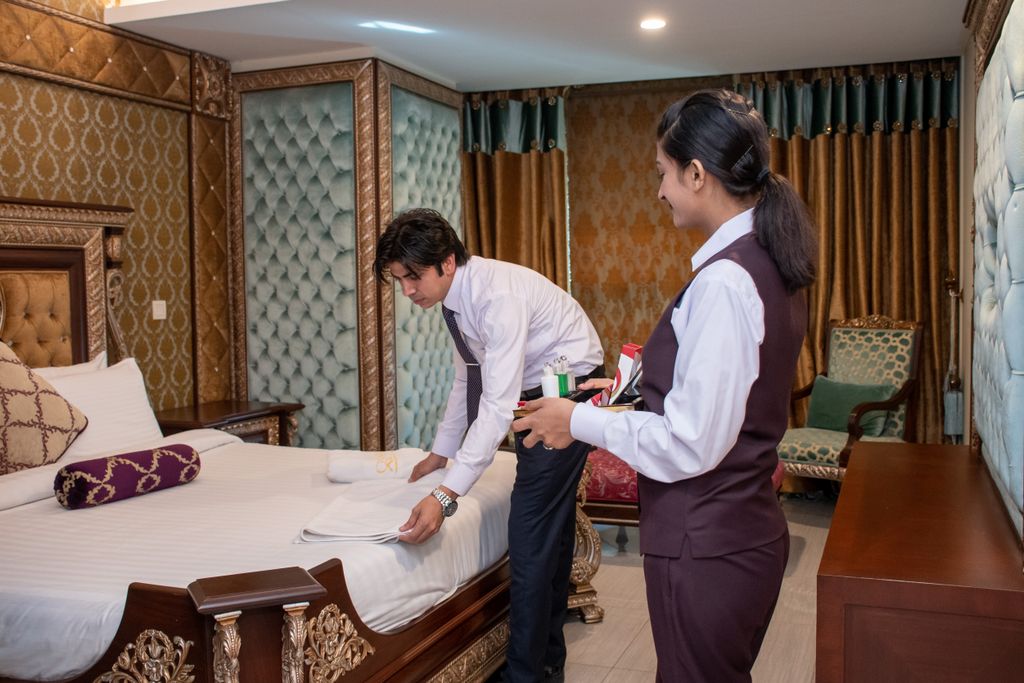
For example, repeated complaints about room readiness might indicate a scheduling problem rather than isolated housekeeping mistakes. Recurring comments about unclear charges may point to gaps in booking communication.
Use these findings to update procedures, train employees, improve property information, and prioritize maintenance.
This is how negative guest feedback prevention becomes part of daily hotel operations rather than an occasional reputation-management task.
6. Train your team to recognize early signs of dissatisfaction
Guests do not always express dissatisfaction directly. Staff may notice repeated questions, visible frustration, hesitation during check-in, or a guest returning to reception several times.
Train employees to respond with curiosity rather than defensiveness. A useful question is, “Is there anything we can do to make your stay more comfortable?”
Employees should also know when they can resolve a problem themselves and when they need managerial approval.
Empowerment must be supported by clear boundaries. Staff need practical guidance on room changes, maintenance escalation, service recovery options, and communicating limitations.
The objective is to make the first response effective, consistent, and respectful.
7. Review the guest journey from booking to departure
Some negative reviews originate before the guest even arrives.
Confusing booking conditions, inaccurate room descriptions, missing arrival instructions, and unexpected fees can create frustration that affects the entire stay.
Map the guest journey and identify moments where expectations may diverge from reality:
- Before booking: Are room descriptions, amenities, and prices accurate?
- Before arrival: Are check-in instructions and policies clear?
- At check-in: Are arrival procedures efficient and welcoming?
- During the stay: Can guests request help and report problems easily?
- Before checkout: Does the team have an opportunity to identify unresolved issues?
- After departure: Is feedback reviewed and used to improve operations?
This broader view helps hotels address the causes of dissatisfaction rather than treating each negative review as an isolated incident.
How Guest Feedback Software Helps Prevent Negative Reviews
Hotel guest feedback software helps properties organize guest opinions and identify recurring problems more consistently. While manual feedback collection may work for smaller properties, a structured digital process can make it easier to review guest satisfaction, identify issues that require attention, and coordinate follow-up across departments.
Messages can be overlooked, feedback may remain in individual inboxes, and recurring problems can be difficult to identify.
Guest feedback software can help hotels organize the collection and analysis of guest opinions, making it easier to identify dissatisfaction and establish a more consistent process.
Collect feedback at the right moment
A guest feedback platform can support a structured approach to gathering opinions during the stay. Instead of relying exclusively on spontaneous complaints or post-checkout questionnaires, the hotel can create opportunities to identify concerns earlier.
The exact timing and communication methods depend on the platform’s available features and the hotel’s configuration.
Make guest satisfaction easier to monitor
A structured feedback process helps managers understand what guests are saying across different stays and service areas.
Rather than relying on scattered comments, the hotel can review feedback to identify recurring issues, assess whether improvements are working, and prioritize operational action.
Connect internal feedback with online reputation management
Internal guest feedback and public reviews serve different purposes.
Internal feedback can reveal problems before they become public. Online review monitoring helps managers understand what guests ultimately share on review platforms and how the property’s reputation develops over time.
Combining the two creates a more complete view of the guest experience.
Stayvolution offers solutions for both guest feedback and review monitoring. Explore the Stayvolution hotel review monitoring dashboard to learn how centralized review monitoring can support a more organized reputation management process.
When evaluating any platform, confirm which channels, integrations, reporting functions, and feedback workflows are supported. Technology should fit your hotel’s actual operating model rather than introduce unnecessary complexity.
How to Monitor Negative Reviews and Learn From Them
Even an effective prevention strategy cannot eliminate every negative review. Some guests will experience problems that cannot be fully resolved, while others may have expectations that the hotel cannot reasonably meet.
The objective is to reduce preventable dissatisfaction, respond professionally when problems occur, and learn from the feedback that guests share publicly.
Monitor the review platforms that matter to your property
Effective hotel review management does not end when a guest receives a response. Hotels should document recurring issues, identify their root causes, assign responsibility for corrective action, and review whether the same complaints continue to occur. This process helps turn individual negative experiences into opportunities to improve service quality.
Depending on the property’s distribution and guest profile, relevant channels may include Booking.com, Airbnb, TripAdvisor, Google, and other review platforms.
Review monitoring helps hotel managers understand how guests describe their experiences, recognize recurring complaints, and identify discrepancies between internal feedback and public reviews.
For example, guests might report room noise privately during their stays, but if similar comments continue appearing in public reviews, the hotel’s response may not be addressing the root cause effectively.
A centralized hotel review monitoring dashboard can help simplify the process of reviewing feedback across supported portals.
Respond to negative reviews professionally
When a negative review appears, respond calmly and specifically.
A strong response should:
- Acknowledge the guest’s experience without becoming defensive.
- Apologize when the hotel has fallen short of its standards.
- Address the main concern rather than relying on generic language.
- Explain the corrective action where appropriate.
- Invite the guest to continue the conversation privately when necessary.
Avoid arguing publicly, disclosing personal information, or making promises that the hotel cannot fulfill.
A professional response cannot undo the original experience, but it can demonstrate accountability to future readers and help the hotel identify what needs to change.
Use negative reviews to identify patterns
Do not stop at responding to individual reviews. Categorize recurring complaints and compare them with internal feedback.
If negative reviews repeatedly mention the same issue, assign an owner, investigate the cause, and track whether the problem improves.
For example, if complaints about check-in delays appear repeatedly during peak arrival times, examine staffing levels, reservation preparation, and arrival procedures.
The most useful outcome of review monitoring is not simply a completed response. It is a measurable improvement in the experience delivered to future guests.
Can Preventing Negative Reviews Improve Your OTA Performance?
Guest satisfaction and online reputation are relevant to a hotel’s commercial performance, but their relationship should be understood carefully.
Reviews help prospective guests evaluate a property, compare alternatives, and judge whether an accommodation meets their expectations. Ratings, review volume, recency, and written feedback can all influence how travelers perceive a hotel.
Online travel agencies use their own ranking systems, and their algorithms can change. A hotel should therefore avoid assuming that a particular rating increase guarantees a specific ranking improvement.
Nevertheless, improving the guest experience and reducing recurring complaints can strengthen the foundations of a hotel’s online reputation.
A practical improvement cycle looks like this:
- Collect feedback while guests are staying at the property.
- Identify dissatisfaction and resolve issues where possible.
- Analyze recurring complaints to improve service delivery.
- Monitor public reviews to understand how guests perceive the changes.
- Evaluate reputation trends and broader business performance over time.
This approach connects guest experience management with reputation management without treating review scores as a substitute for service quality.
For a deeper look at the relationship between reviews and online travel agency visibility, explore how to improve hotel OTA ranking through better reviews.
The priority should always be to deliver a better guest experience. Any improvement in reputation or booking performance should be evaluated using the property’s own results rather than assumed in advance.
Negative Review Prevention for Hotels, B&Bs, and Vacation Rentals
The principles of negative review prevention apply across different accommodation types, although the processes may vary.
Hotels
Hotels typically manage several departments, multiple shifts, and a larger volume of guest interactions. Their prevention strategy should establish clear responsibilities for receiving feedback, assigning tasks, escalating complaints, and following up.
Department-level reporting can help managers identify whether recurring issues originate in housekeeping, maintenance, reception, or another part of the operation.
Bed and breakfasts
B&Bs often rely on personal service and direct communication. A simple mid-stay check-in can help hosts discover concerns that guests might otherwise keep to themselves.
Because teams are smaller, the process does not need to be complicated. The essential elements are accessibility, timely action, and a follow-up to confirm that the guest is comfortable.
Vacation rentals
Vacation rental guests may interact with the host remotely, making it particularly important to provide clear arrival instructions, accurate property information, and a reliable channel for reporting issues.
Problems involving access, cleanliness, appliances, Wi-Fi, or maintenance can become frustrating quickly when the guest does not know whom to contact.
A defined communication process and a clear escalation plan help hosts respond consistently, even when they are not physically present.
Stayvolution also provides software for accommodation businesses beyond traditional hotels. Explore software for B&Bs and vacation rentals to learn more about the solutions available for different hospitality operations.
How to Measure Whether Your Prevention Strategy Is Working
Preventing negative hotel reviews should be treated as an ongoing operational improvement process. To understand whether your approach is effective, track a small set of meaningful indicators.
Mid-stay feedback participation: Measure how many guests respond to feedback requests. Low participation may indicate that the timing, channel, or questionnaire needs improvement.
Time to first response: Track how quickly the team acknowledges an issue after receiving it. Establish an appropriate internal target based on the severity of the complaint and your service model.
Issue resolution time: Measure how long it takes to resolve common problems, separating urgent issues from those that require more time.
Repeat complaint frequency: Monitor how often the same issue reappears. Recurring problems may indicate that previous interventions did not address the root cause.
Guest satisfaction trends: Compare feedback over time, using consistent questions and considering differences in guest mix, seasonality, and occupancy.
Negative review themes: Categorize public complaints by topic and track whether specific issues become less frequent after corrective action.
Review ratings and volume: Monitor these alongside operational indicators, but avoid interpreting short-term changes as proof that a single intervention caused an improvement.
For example, if complaints about room cleanliness decline after a housekeeping process change, that is useful evidence that the intervention may be working. Compare the result across a meaningful period and consider other changes that could have influenced it.
Do not rely on one metric alone. A lower number of complaints could reflect better service, but it could also mean that guests have fewer convenient ways to report problems.
The strongest measurement system combines feedback participation, response and resolution performance, recurring complaint analysis, and public reputation trends.
A Practical Checklist to Prevent Negative Hotel Reviews
Use this checklist to turn the principles in this guide into a repeatable process for your property.
- Provide accurate room descriptions, amenity information, and pricing details.
- Give guests clear arrival instructions and realistic service expectations.
- Establish an easy way for guests to share feedback during their stay.
- Choose appropriate feedback timing for your property and guest journey.
- Assign responsibility for reviewing incoming feedback.
- Define procedures for acknowledging, escalating, and resolving complaints.
- Follow up to confirm that the guest’s issue has been addressed.
- Review recurring complaints with the relevant departments.
- Monitor public reviews across the platforms relevant to your property.
- Respond professionally to negative reviews.
- Track operational indicators and review trends over time.
- Use the findings to improve procedures, training, maintenance, and communication.
You do not need to implement every improvement at once. Start with the problems that occur most frequently or have the greatest impact on the guest experience, then expand the process as your team becomes more confident.
Conclusion: Prevent Negative Reviews by Acting Before Checkout
Learning how to prevent negative hotel reviews is ultimately about creating a better process for listening to guests and responding to their needs.
Hotels cannot control every guest opinion, guarantee positive reviews, or resolve every issue perfectly. They can, however, reduce avoidable service failures, make it easier for guests to communicate dissatisfaction, and take action while there is still an opportunity to improve the stay.
The most effective approach combines three elements: proactive guest feedback collection, consistent complaint resolution, and ongoing review monitoring.
Post-checkout reviews tell you how guests describe their experiences after the fact. Feedback collected during the stay can help you discover problems while you still have a chance to address them.
Do not wait for a negative review to discover that a guest was unhappy. Create a process that gives your team the opportunity to act before checkout.
Discover how Stayvolution’s guest feedback solution can help your team collect mid-stay feedback, identify problems before checkout, and improve the guest experience. A proactive approach can help prevent bad hotel reviews by giving your team more opportunities to address dissatisfaction before it becomes a public complaint.
Frequently Asked Questions
Hotels can reduce preventable negative reviews by setting accurate expectations, collecting feedback during the stay, responding quickly to complaints, resolving issues, and following up with guests. Monitoring public reviews and analyzing recurring complaints also helps prevent the same problems from affecting future stays.
Common reasons include cleanliness issues, maintenance problems, poor service, communication failures, unexpected costs, noise, and unmet expectations. The underlying problem is often made worse when the hotel fails to respond effectively or the guest does not have an easy way to report dissatisfaction.
Give guests an accessible way to share concerns, acknowledge their feedback promptly, assign responsibility for resolving the problem, communicate the next steps, and follow up to check the outcome. Staff should be trained to handle complaints professionally and escalate issues when necessary.
The two approaches serve different purposes. Mid-stay feedback creates an opportunity to address a problem before departure, while post-stay surveys help hotels evaluate the overall experience. Combining both methods gives managers a more complete understanding of guest satisfaction.
Guest feedback software can help hotels collect opinions in a structured way, organize incoming feedback, and identify recurring dissatisfaction. Depending on its capabilities, it may also support reporting and workflows that help teams act on guest concerns. Its value depends on whether feedback is reviewed and translated into operational improvements.
Responding professionally can demonstrate accountability and help future travelers understand how the hotel handles problems. However, a public response alone does not correct the underlying service failure. Hotels should investigate recurring complaints, implement corrective actions, and monitor whether the issue continues.
Small properties can begin with a simple mid-stay check-in, clear communication about amenities and policies, a direct channel for reporting problems, and a consistent follow-up process. The system can remain lightweight as long as feedback reaches someone who can take action.
Better guest experiences and stronger reviews can support a property’s online reputation, but no specific ranking improvement is guaranteed. Booking.com, TripAdvisor, and other platforms use their own systems, which may change over time. Hotels should prioritize service quality, monitor their reputation, and evaluate performance using their own data.
Resources
- Hu et al., What do hotel customers complain about? Text analysis using structural topic model, published in Tourism Management. The study analyzed 27,864 hotel reviews and identified recurring sources of dissatisfaction. Research on ScienceDirect.
- Skovoroda et al., Exploring serial patterns in negative hotel reviews, published in Annals of Tourism Research Empirical Insights in 2025. The research analyzed 80,521 negative Booking.com reviews and identified recurring patterns across guest experience topics. Research on ScienceDirect.